Learn To Sail In Hobart: Lessons, Clubs And A First Sail
Hobart has four sailing clubs running structured courses, and one operator running a three-hour guided sail on a 62-foot yacht. This page compares what each path actually gives you, and who should pick which.
Short answer
Four Hobart clubs run Australian Sailing courses: Royal Yacht Club of Tasmania, Sandy Bay Sailing Club, Bellerive Yacht Club and Derwent Sailing Squadron. A certificate course runs 2 to 9 sessions and teaches crewing skills on keelboats or dinghies. A three-hour guided sail on Helsal IV, from US$115 per person, gives you a taste of yacht sailing with instruction if you want it, but no certificate.
Broader trip planning sits in the guide to sailing around Tasmania.
| Quick Facts | Detail |
|---|---|
| Clubs with published courses | Royal Yacht Club of Tasmania, Sandy Bay Sailing Club, Bellerive Yacht Club, Derwent Sailing Squadron |
| Course framework | Australian Sailing Start Crewing, Start Helming, Start Sailing 1 |
| Kids program | Tackers, ages 7 to 12 |
| Adult beginner entry | Start Crewing or Start Sailing 1 |
| Guided sail option | Helsal IV, 62 ft, 3 hours, from US$115 per person |
| Guided sail meeting point | Kings Pier Marina, 2 Franklin Wharf |
| Free cancellation | Up to 24 hours before, on all four covered products |
| Certificate on a guided sail | No |
Where Can You Learn To Sail In Hobart?
In Hobart, you can learn to sail at local sailing clubs and accredited schools around the city's waterfront, where options range from beginner dinghy courses to keelboat training for adults and juniors; the easiest way to begin is to contact a club or school directly, ask about introductory sessions, and choose the course that best fits your experience and goals.
The Royal Yacht Club of Tasmania runs Discover Sailing sessions of 3 to 4 hours, which bundle a safety briefing, rigging a boat, a sail session and a visit to Kings Pier, the same marina where the Helsal IV yacht is berthed. Beyond that taster, the club teaches the Australian Sailing Crew and Helm course over 3 sessions on its Young 88 keelboat, and runs Tackers for children aged 7 to 12 with boats and life jackets provided. The details are on the club's learn-to-sail page.
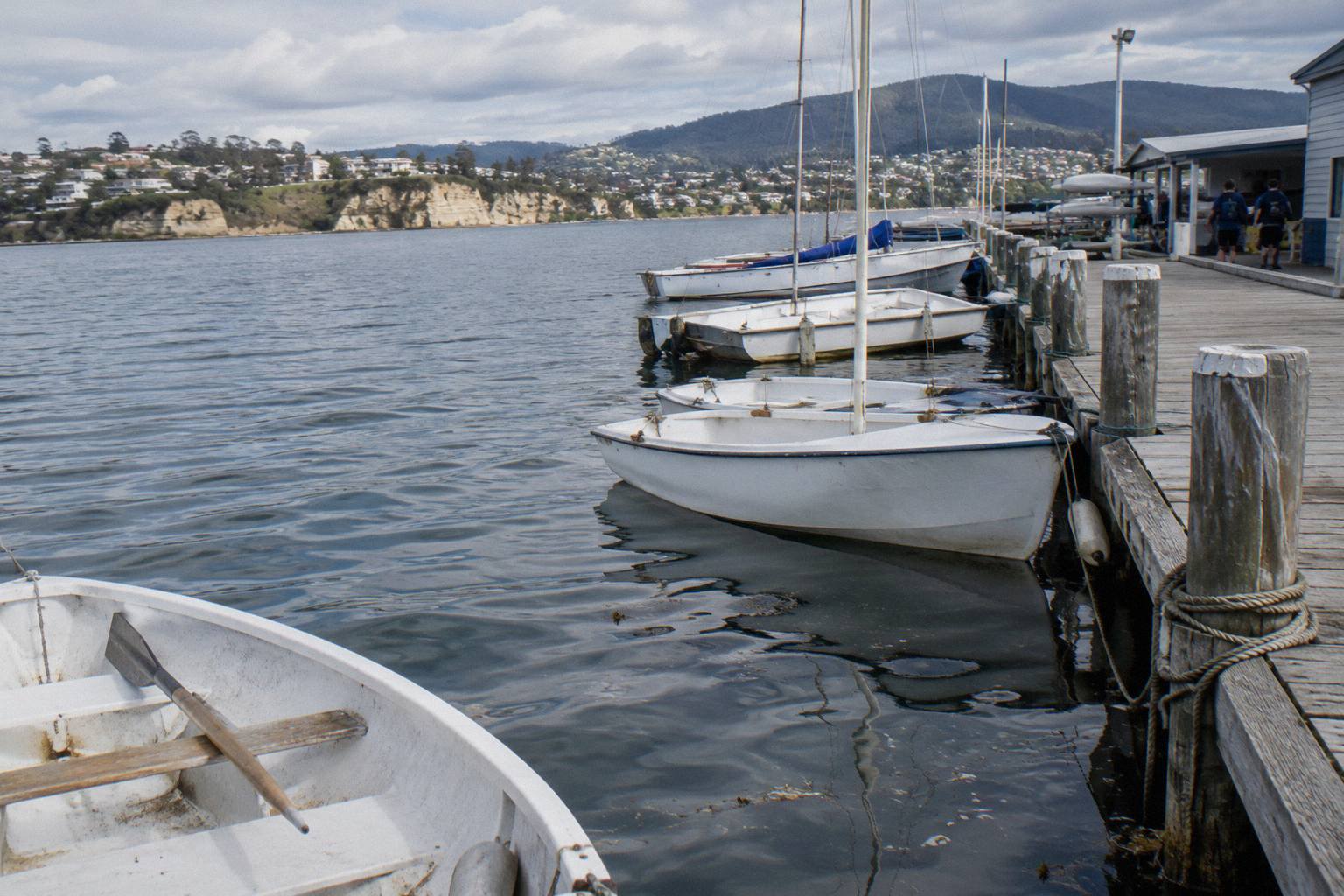
Sandy Bay Sailing Club takes the dinghy route. Its adult Learn to Sail course follows Australian Sailing Start Sailing 1 on Pacer dinghies, with a member rate and a non-member rate and a certificate on completion. The club also lists Tackers 2 and a Cadet Learn to Sail course for ages 9 to 17. Course outlines are on the club's program page.
Bellerive Yacht Club, on the eastern shore, publishes Tackers 2 as nine Sunday mornings for ages 7 to 12, plus a two-day Start Crewing keelboat course. The Derwent Sailing Squadron, through its SailTrain arm, lists Start Crewing as 12 hours across 2 days with a certificate and equipment provided. The club lists its current fees directly.
| Club | Beginner offering | Boat type | Format | Ages |
|---|---|---|---|---|
| Royal Yacht Club of Tasmania | Discover Sailing, Crew and Helm course, Tackers | Young 88 keelboat | 3 to 4 hour taster; 3 sessions | Tackers 7 to 12 |
| Sandy Bay Sailing Club | Start Sailing 1, Tackers 2, Cadet course | Pacer dinghies | Certificate course, member and non-member rates | Cadets 9 to 17 |
| Bellerive Yacht Club | Tackers 2, Start Crewing | Keelboat | Nine Sunday mornings; 2 days | Tackers 7 to 12 |
| Derwent Sailing Squadron | Start Crewing (SailTrain) | Keelboat | 12 hours over 2 days, certificate | Adults |
No club fee appears in the table above, and none is quoted anywhere on this page: the fee figures in club sources carry no stated currency, so the honest move is to say the club lists its current fees and let you check. If you want the cost question answered properly, the article on how expensive learning to sail is works through it in detail.
What Does A Certificate Course Actually Teach?
A certificate course teaches the practical, job-ready skills of a specific field through focused, structured lessons rather than broad theory. You can expect core concepts, hands-on exercises, real-world projects, and assessments that build competence step by step, often finishing with a credential that signals your abilities to employers.
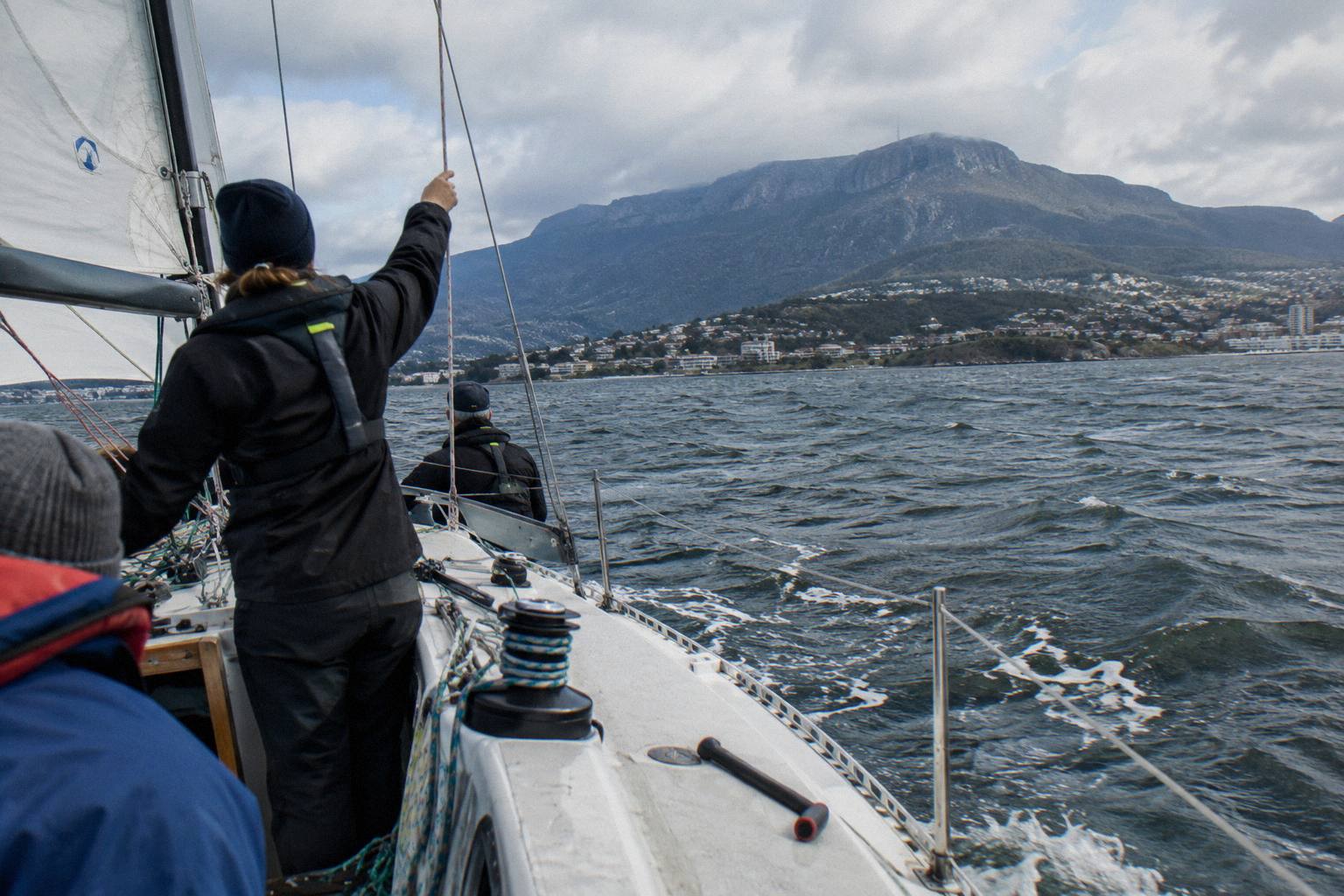
The distinction matters more than beginners expect. A keelboat Start Crewing course, like the ones at Bellerive and the Derwent Sailing Squadron, teaches you to be a useful crew member on a boat of roughly six to nine metres: preparing the boat, working sheets and halyards, steering to instruction, and recovering a person from the water in a drill setting. It is the standard first rung for adults who picture themselves on yachts rather than dinghies.
A dinghy course on Pacer-class boats, as Sandy Bay Sailing Club teaches, is wetter and more physical. You learn faster because the boat reacts immediately to everything you do, and capsizing is treated as part of the syllabus rather than an incident. Many instructors consider dinghies the faster teacher; many adults prefer the keelboat's stability. Neither preference is wrong, and Hobart offers both within a few kilometres of the city centre.
What a course does not give you is time on a large yacht. Course boats are chosen for teaching, not for scale, so a new graduate can hold a course and trim a sail but may never have stood on the deck of a 60-foot cruiser-racer. That gap is exactly where a guided sail fits, which the next section works through.
Lessons Or A Guided Sail: Which Should You Pick?
Choose a guided sail if you want to relax on the water while someone else handles the boat, and choose lessons if you want hands-on experience and a skill you can take with you. If you are short on time or new to sailing, the guided option is the easier pick; if you are curious and eager to learn, lessons are the better fit.
Think through the commitment question first. A Start Crewing course is 12 hours over 2 days at the Derwent Sailing Squadron, or 2 days at Bellerive. Bellerive's Tackers 2 runs nine Sunday mornings. That is a real chunk of a season, and it is worth being sure the sport suits you before you enrol. A three-hour sail is the cheapest way to find out whether being on the water under canvas agrees with you at all.
Then think about what you actually want to do in Hobart. If the answer is crewing on friends' boats, joining a club, or working toward races, a course is the entry ticket; the race itself is covered in the Sydney to Hobart yacht race guide, and plenty of club sailors set that as a long-term goal. If the answer is an afternoon on the Derwent with family, or showing visiting friends the harbour from the water, the guided sail is the product that matches.
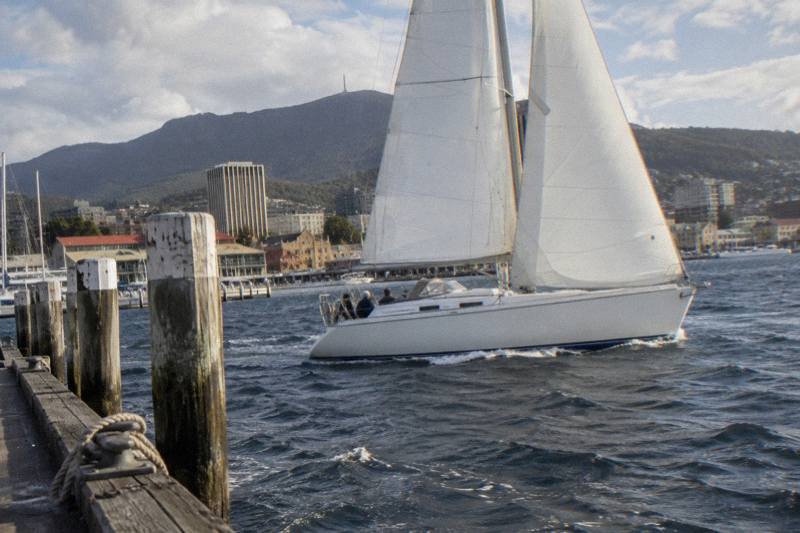
The Helsal IV option deserves a plain description. Helsal IV is a Dynamique 62, 62 feet or 18.65 metres, designed by Philippe Briand, built in France and classed a cruiser-racer; the operator says she has taken part in several Sydney to Hobart races. Hobart Yachts runs the three-hour sail from Kings Pier Marina, morning or afternoon, with a skipper and crew aboard, snacks and non-alcoholic drinks included, and sailing instruction if you want it. The operator does not state whether guests may take the helm or trim sails, so if hands-on turns matter to you, ask the operator when booking.
One honest caution belongs here: the guided sail is not a course in miniature. Three hours with a skipper who explains what he is doing will teach you vocabulary and a feel for the boat, but no certificate is issued, and nothing on the booking page suggests the session counts toward any Australian Sailing level. If your goal is a qualification, book the club course; if your goal is a good afternoon that might turn into an ambition, book the sail. Whether you can help sail the yacht is covered in more detail in the piece on helping crew a Hobart yacht.
What The Helsal IV Sail Gives A Complete Beginner
For a complete beginner, the Helsal IV sail offers a first real taste of life at sea: a chance to stand a watch, take the helm under guidance, help with sails and daily routines, learn the rhythms of ocean travel from people who know the boat, and build the kind of confidence that only comes from doing it yourself.
The practical details are forgiving. From US$115 per person on the booking page, children aged 4 to 17 pay a child rate and infants under 4 sail free on laps. Cancellation is free up to 24 hours before, and if the skipper judges the weather too bad, the operator reschedules or refunds in full; the operator's FAQ notes a gale forecast cancels the day before. The FAQ also covers footwear: flat-soled grippy shoes, with bare feet, high heels and thongs not allowed. Wet weather gear is not included, with only a few spares on board, so bring your own. These details come from the operator's FAQ page.
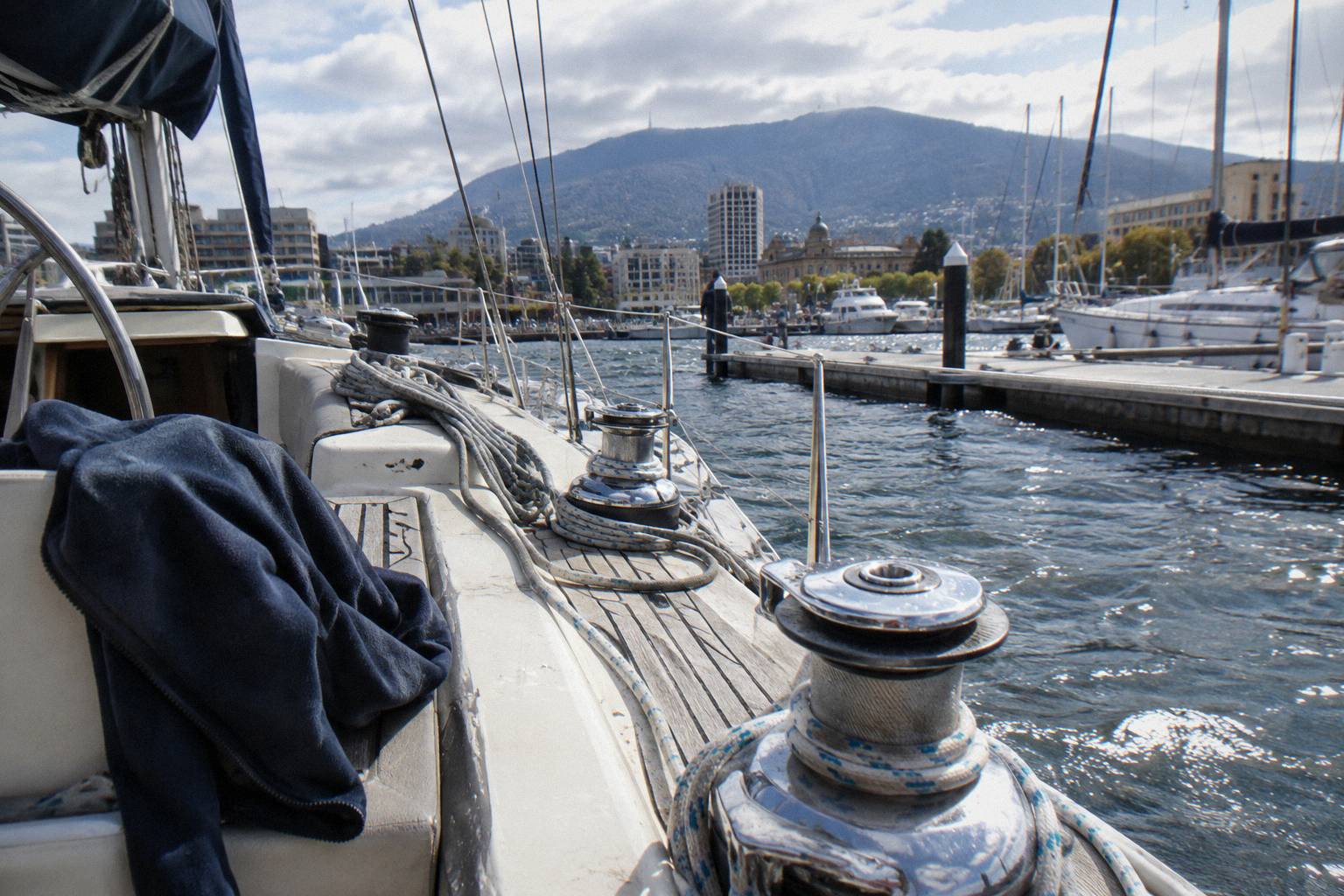
For a beginner weighing the lesson decision, the sail answers a different question than a course does. It shows you how a big boat behaves, how a skipper runs one, and how you feel about the whole environment: the motion, the space, the pace. The operator says harbour sailing on the Derwent is well protected, which makes it a fair first exposure rather than a test. If you come off the water wanting more, the clubs are the next step, and you will enrol knowing the sport fits you.
Parking is the one detail that catches people: parking on the dock at King's Pier is 2-hour or permit only, and the nearest all-day options are the Dunne Place and Evans Street car parks at Macquarie Point plus the Market Place and Argyle Street car parks. Arrive about 10 minutes early; Helsal IV is the last boat on the far left of the marina.
For readers who would rather learn by watching the sport at its top end, the guide to watching the Sydney to Hobart finish covers the waterfront vantage points around Constitution Dock, a short walk from the same marina.

What About Age: Kids And Older Beginners
Yes, all ages are welcome here, from young kids to older adults trying something new. Age is rarely a barrier: children tend to adapt quickly, while older beginners can learn at a comfortable pace with patient guidance. Whether you're planning a family adventure or starting fresh later in life, there's a place for you, so don't let a few candles on the cake hold you back.
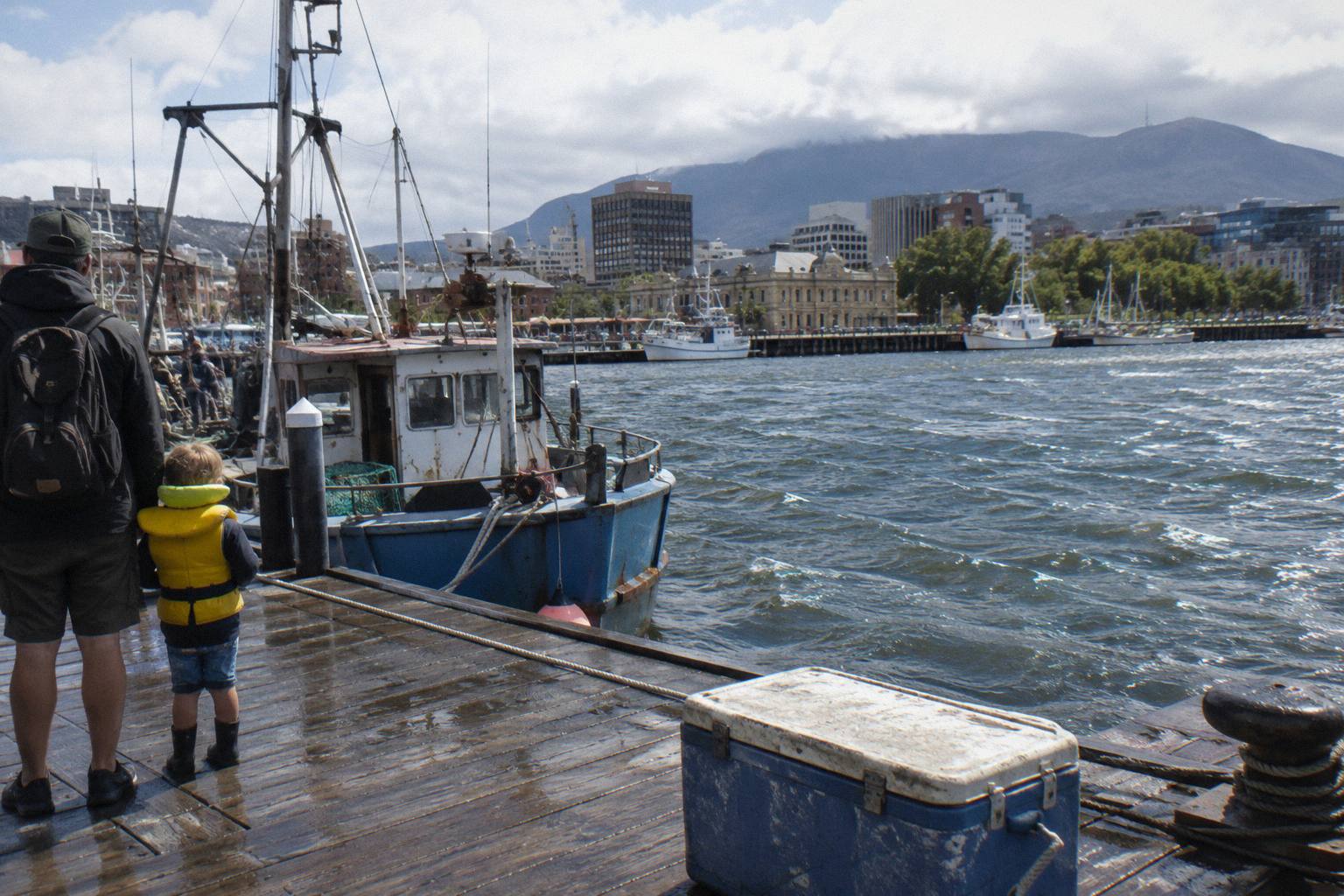
Children's sailing in Hobart runs through the Tackers framework, which the clubs above all plug into. One clause covers the specifics of kids and courses, and the dedicated piece on what age kids can learn to sail owns that question. On the guided-sail side, Helsal IV takes all ages, with the 4-to-17 child rate and infants under 4 free on laps, so a family can share the same deck rather than split by age group.
Older beginners get the same reassurance in different form. Clubs list adult beginner courses without an age ceiling, and the race's own record of participants into their 80s is the strongest signal that the sport does not expire; the fuller argument sits in whether 50 is too old to learn sailing. The short version: start with Start Crewing on a keelboat if stability matters to you, and let the dinghy option wait until you know your balance on the water.
What The Sources Do Not Say
The sources remain silent on several practical details, leaving open questions about seasonal variations, exact costs, accessibility for visitors with limited mobility, and how recent changes may have altered the experience. Travelers should treat the available information as a starting point, verify current conditions before arrival, and accept that some specifics simply are not documented in the published material.
The clearest example is hands-on sailing. The operator lists sailing instruction if you want it, full stop. Nothing in the operator's pages or the booking page promises a turn at the helm, a winch handle, or a defined crew role, so this page promises none of it either. If helping sail the yacht is the reason you would book, email the operator first and get the answer in writing.
The club fee gap has already been noted once above and is not repeated here. The Tasman Island cruises, run by Pennicott Wilderness Journeys, list no price and no rating in the material available for this page: not stated, ask the operator. Hotel pickup is not included on the Helsal IV sail or on the Tasman Island tours. None of this makes the products weaker; it just means the booking conversation matters.
| Question a beginner asks | Stated answer | Source |
|---|---|---|
| Can I steer the yacht? | Yes, guests can take the helm, with sailing instruction offered if wanted | Operator pages |
| What do club courses cost? | Club lists its current fees | Club pages |
| Is there an age cap for adult beginners? | None stated; racers into their 80s noted | Race site |
| Is pickup included on the sail? | No; meet at Kings Pier Marina | Operator |
| Tasman Island cruise price? | Not stated; ask the operator | Operator |
Sailing Lessons Or A Wilderness Cruise: A Different Ladder
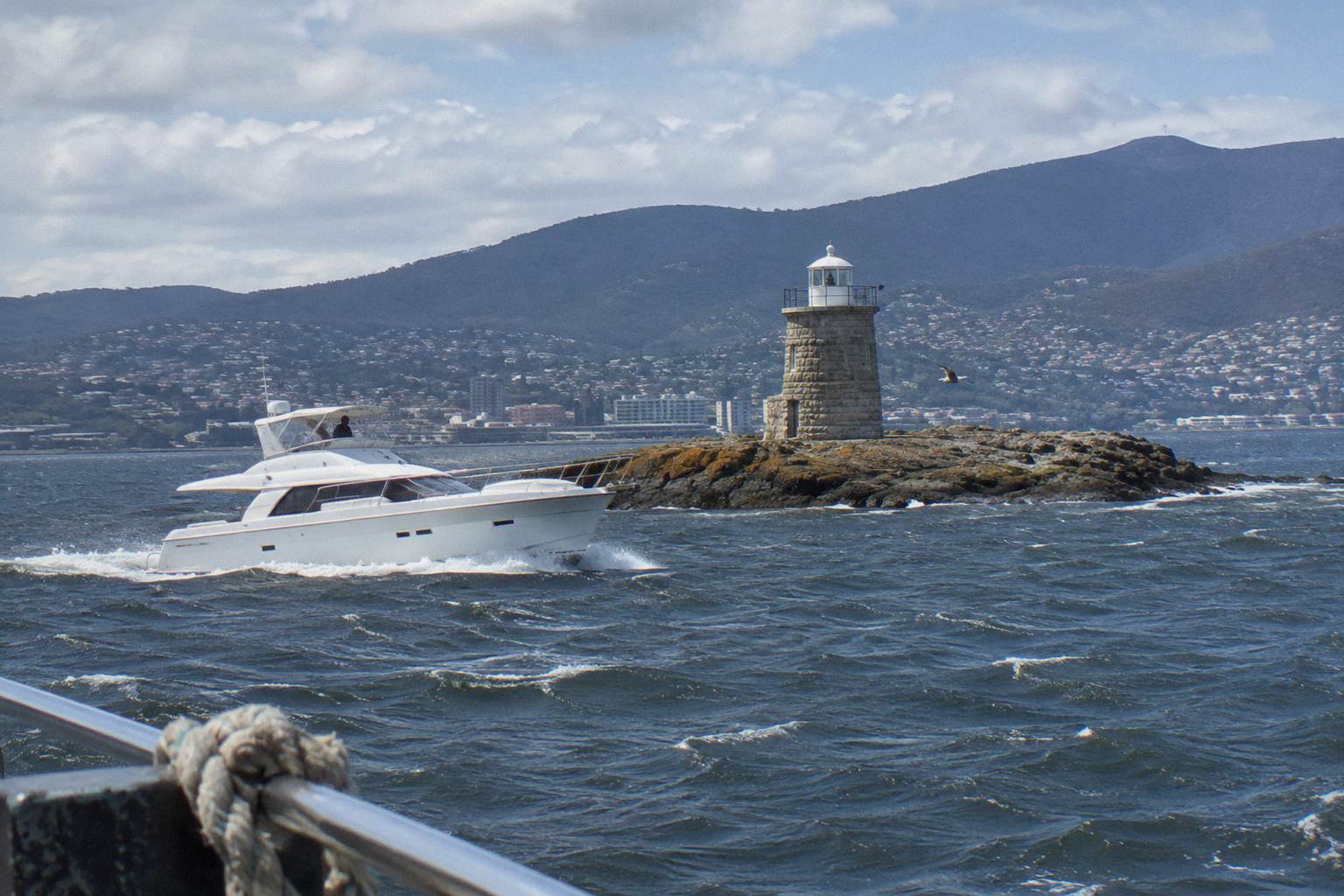
If your goal is to actually learn to sail, lessons put you at the helm with an instructor beside you; if you would rather taste the life before committing, a wilderness cruise lets you live aboard, watch the crew work, and drift through remote anchorages while someone else handles the boat. Either way, this is a different ladder into the sailing world, and neither rung is the wrong one.
The Bruny Island Wilderness Coast Eco Cruise With Lunch is a full day of about 9.5 to 10 hours built around a 3-hour cruise, from US$195 per person, rated 4.8 across 578 reviews, departing Franklin Wharf at 07:45. It is a spectator product: you watch the coast, the crew handles the boat. The operator's FAQ covers children of all ages on cruises, though the Bruny Island Traveller tour is not recommended for young children; the cruise here is a different product. Cancellation is free to 24 hours before.
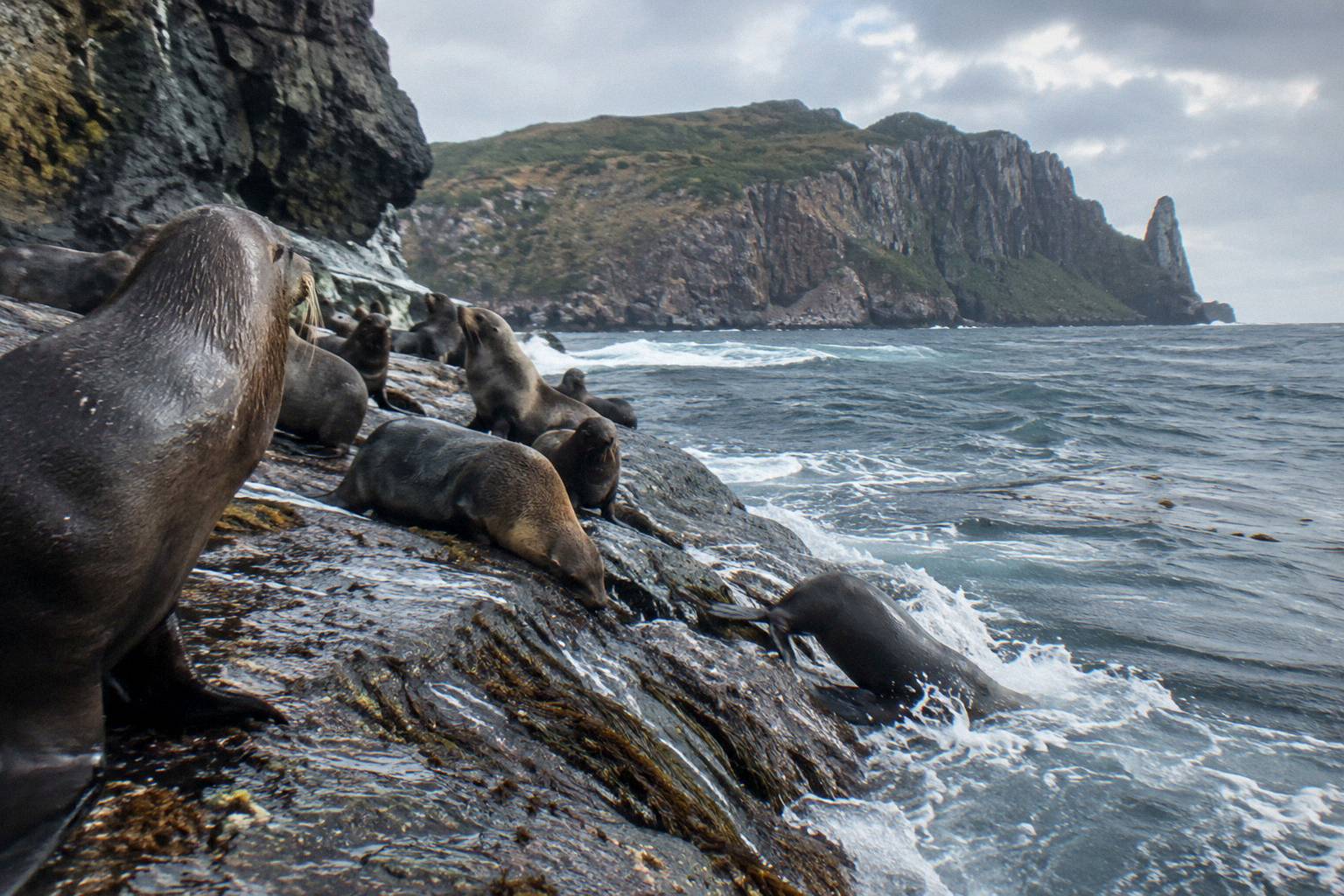
The Tasman Island Cruises Day Tour From Hobart runs about 10.5 hours with hotel pickup not included, check-in at Franklin Wharf at 7:15am, and no price or rating stated. The combined Tasman Island Cruises And Port Arthur Historic Site Day Tour adds Port Arthur admission over the same 10.5-hour span. If a club course consumes your winter weekends, one of these full days is a reasonable way to spend a summer one.

The distinction is worth a sentence more because the sites selling these products sit side by side. A cruise shows you Tasmania's coast; a course teaches you to move across it under your own skill; the guided sail sits between the two, with sails above and a skipper in charge. This site exists for that middle ground: Hobart Sailing covers the sail and the cruising days in one place, with the race and the clubs as context.
The Tasman Island and Port Arthur combination suits visitors who want the historic site without organising separate transport; admission is bundled in, whereas on the plain Tasman day tour it comes as an optional paid upgrade. Neither is a sailing lesson, and neither pretends to be.
Common Mistakes When Planning To Learn To Sail In Hobart
The most common mistakes when planning to learn to sail in Hobart include underestimating local weather and water conditions, booking a course without checking instructor qualifications, choosing the wrong season, packing inadequate gear, and assuming prior boating experience is enough. Avoiding these errors means researching schools carefully, matching the course to your skill level, and preparing properly before you arrive.
The first mistake is the qualification confusion. Guests sometimes book the three-hour sail expecting a credential or a logged crew role; nothing of the sort is offered, and disappointment follows. The sail is a taste, a good one, but a taste. The second is format mismatch: if your dream is cruising on yachts, Start Crewing on a keelboat maps directly onto it, while a Pacer dinghy course, though an excellent teacher, spends its hours on a different skill set.
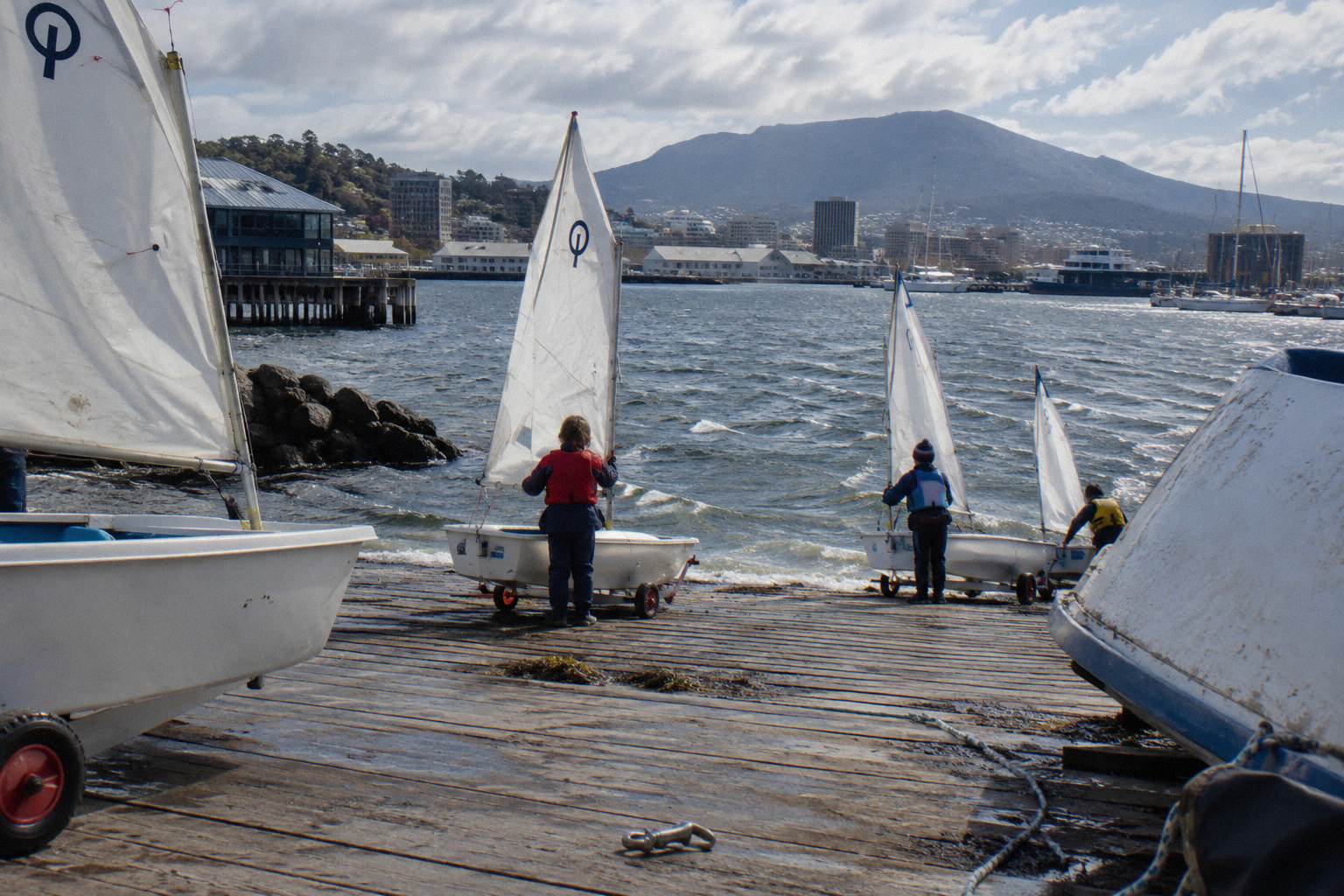
The third is logistical. Arriving at King's Pier in thongs or heels means being told to change or miss the sail, and parking on the dock is 2-hour or permit only, which does not cover a 3-hour sail plus buffer. The all-day car parks at Macquarie Point, Market Place and Argyle Street are the workable options. The fourth is calendar blindness: the Australian Wooden Boat Festival runs 5 to 8 February 2027 and the Royal Hobart Regatta runs 6 to 8 February 2027, the same weekend, and waterfront access and accommodation tighten around it. Helsal IV's availability on any event day is not stated.
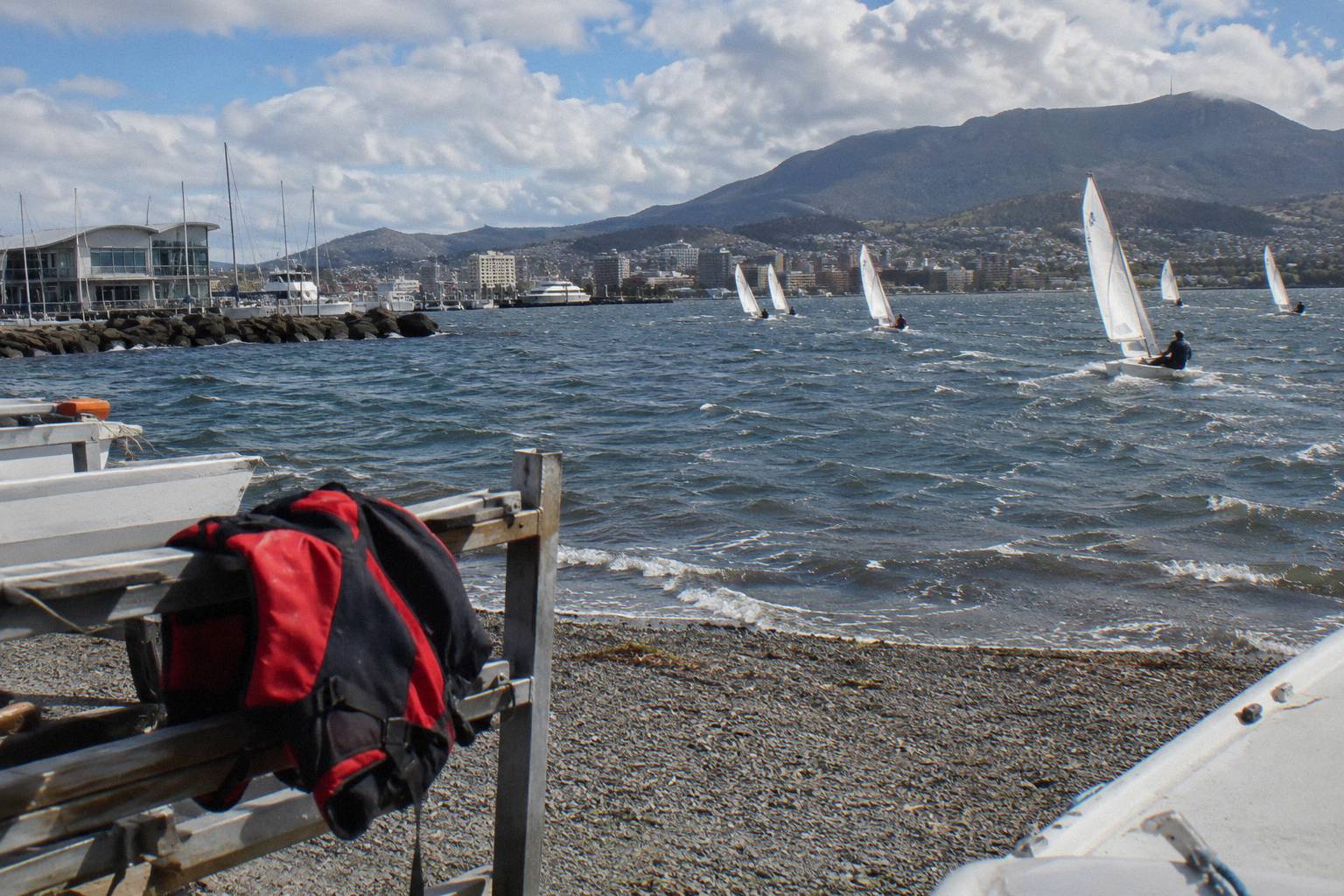
A fifth mistake, worth naming because it recurs in every intake season: waiting for perfect weather to start. Hobart's mean maximum is 21.8 °C in January and February and 11.9 °C in July, per the Bureau of Meteorology's long-term averages, and clubs teach through most of that range. The skipper, not the student, makes the weather call on the guided sail; the sensible beginner just dresses for the day, following the advice in what to wear sailing in Hobart.
Common Questions About Learning To Sail In Hobart
Can You Learn To Sail In Hobart Without Any Experience?
Yes. Every path described here takes complete beginners: the clubs run Australian Sailing beginner courses with equipment provided, and the operator of the Helsal IV sail states it suits all ages and experience levels, with a professional skipper and crew aboard and instruction offered if you want it.
How Much Do Sailing Lessons In Hobart Cost?
The club fee figures carry no clearly stated currency in the material available, so no amount is quoted here. Each club, Royal Yacht Club of Tasmania, Sandy Bay Sailing Club, Bellerive Yacht Club and Derwent Sailing Squadron, lists its current fees on its own page. The guided Helsal IV sail costs from US$115 per person.
Is A Guided Sail A Good Way To Start Learning?
It is a good way to start learning whether you like sailing. Three hours with a professional skipper, commentary and optional instruction gives you vocabulary, a feel for a large yacht and a view of how one is run. It does not issue a certificate or replace a Start Crewing course if your goal is to sail independently.
Which Hobart Club Should A Beginner Join?
It depends on the boat you want. Sandy Bay Sailing Club teaches Start Sailing 1 on Pacer dinghies; Bellerive Yacht Club and the Derwent Sailing Squadron teach Start Crewing on keelboats; the Royal Yacht Club of Tasmania offers a Discover Sailing taster, a Crew and Helm course on its Young 88, and Tackers for children.
Can Children Learn To Sail In Hobart?
Yes, through the Tackers program for ages 7 to 12, which the Royal Yacht Club of Tasmania, Sandy Bay Sailing Club and Bellerive Yacht Club all run, with boats and life jackets provided at the Royal Yacht Club. Little Tackers exists for ages 4 to 6, and junior dinghy classes often start around 6 to 9.
What Happens If The Weather Is Too Bad To Sail?
On the Helsal IV sail, the skipper cancels if the weather is too bad; the operator's FAQ notes a gale forecast cancels the day before, and a cancellation brings a reschedule or a full refund. Booking-page cancellation is free up to 24 hours before on all four covered products. Club courses handle weather through the club.