What To Wear On A Sailing Trip In Hobart
Hobart sits far enough south that a summer afternoon and a winter morning are two different wardrobes. Here is how to dress for a sail on the Derwent, based on what the operator states and what the Bureau of Meteorology's long-term averages say.
Short answer
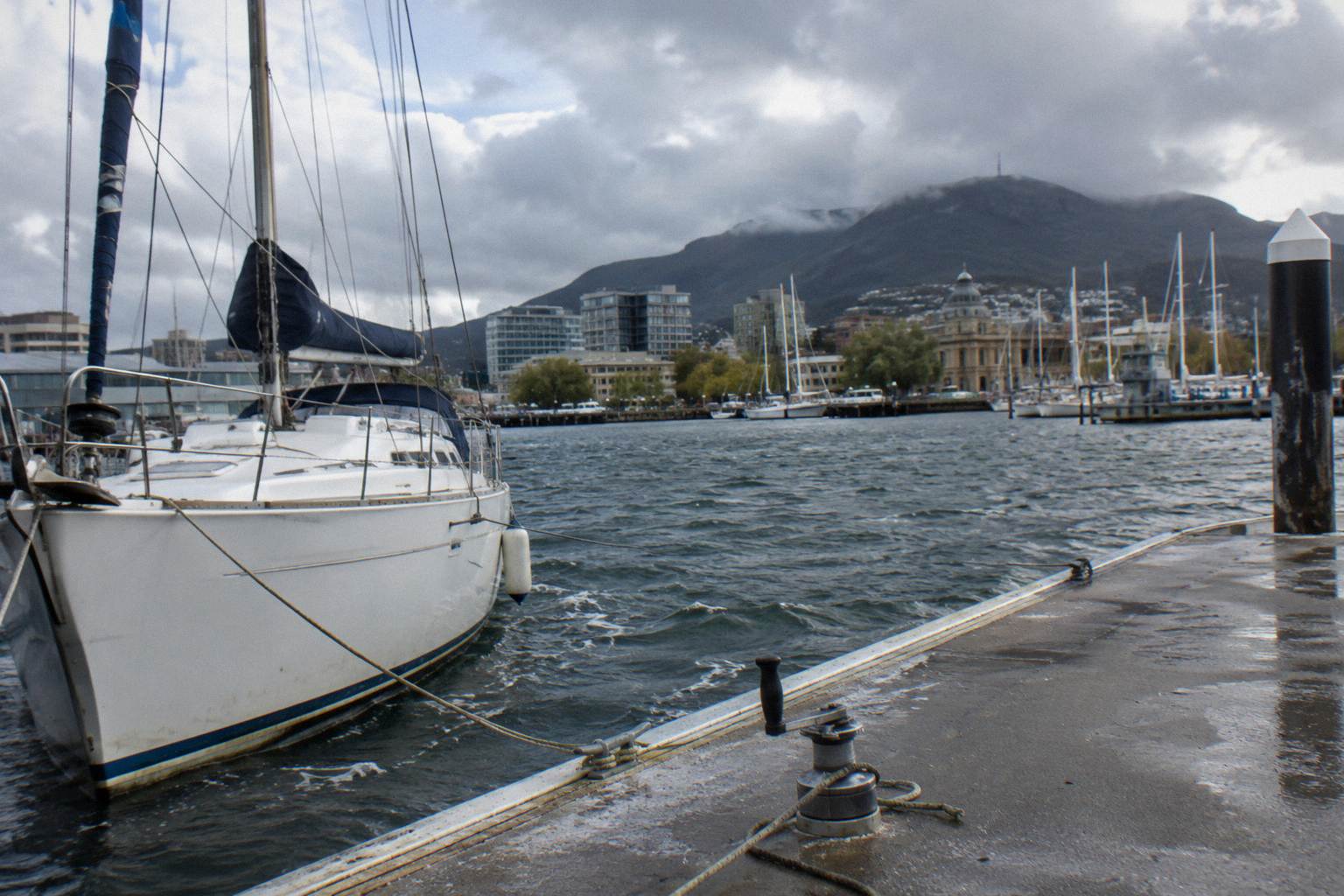
Wear layered clothing you can add to or strip off, flat-soled grippy shoes (bare feet, high heels and thongs are not allowed on Helsal IV), and bring your own waterproof jacket because only a few spares are on board. Hobart's mean maximum ranges from 11.9 °C in July to 21.8 °C in January, so dress about five degrees cooler than the land temperature for on the water.
Part of the site's on-the-day planning series, alongside choosing the right season for a Hobart sail and what the Derwent is like to sail on.
| Quick Facts | Detail |
|---|---|
| Footwear rule | Flat-soled grippy shoes; bare feet, high heels and thongs not allowed |
| Wet weather gear | Bring your own; a few spares on board only |
| July mean maximum | 11.9 °C |
| January mean maximum | 21.8 °C |
| Sail length | 3 hours, morning or afternoon |
| Time slots Oct to Mar | 9am to 12pm and 2pm to 5pm |
| Time slots Sep, Apr, May | 10am to 1pm |
| Drinks on board | Tea, coffee and water included; bar prices for wine and beer |
| Meeting point | Kings Pier Marina, 2 Franklin Wharf |
What Should You Wear On A Sailing Boat In Hobart?
The short answer is layers, grippy flat-soled shoes and your own waterproof. Hobart's long-term mean maximum never exceeds 21.8 °C even in high summer, and the July mean maximum is 11.9 °C with a mean minimum of 4.7 °C. On the water you lose a few more degrees to wind, so the standard approach is a base layer, a warm mid layer, a windproof outer, and shoes with grip that will not mark the deck.
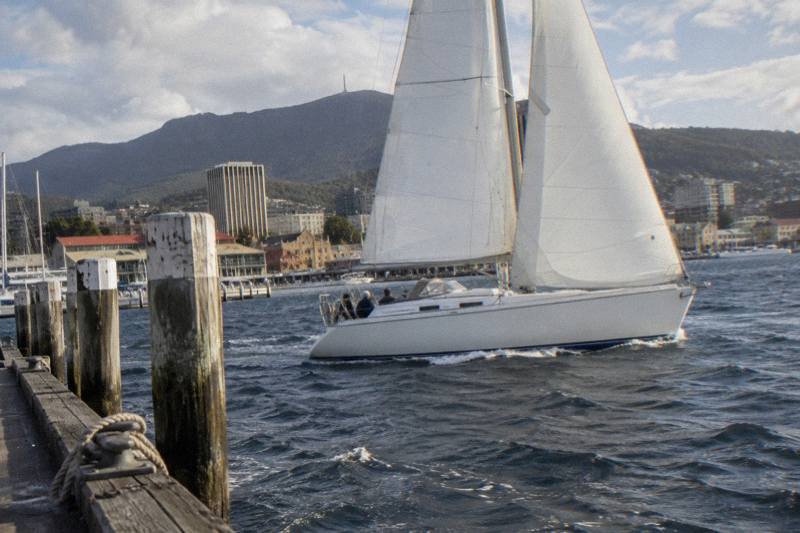
The vessel this site features, the Hobart Sailing Experience on Helsal IV, is a 3-hour skippered sail that the operator, Hobart Yachts, describes as suitable for all ages and experience levels. That matters for clothing because you are not signing up for a specialist expedition; you are standing, sitting and moving around a 62-foot cruiser-racer for three hours, sometimes in shade, sometimes in sun, sometimes in a breeze. Clothing that lets you adjust is worth more than any single heavy item.
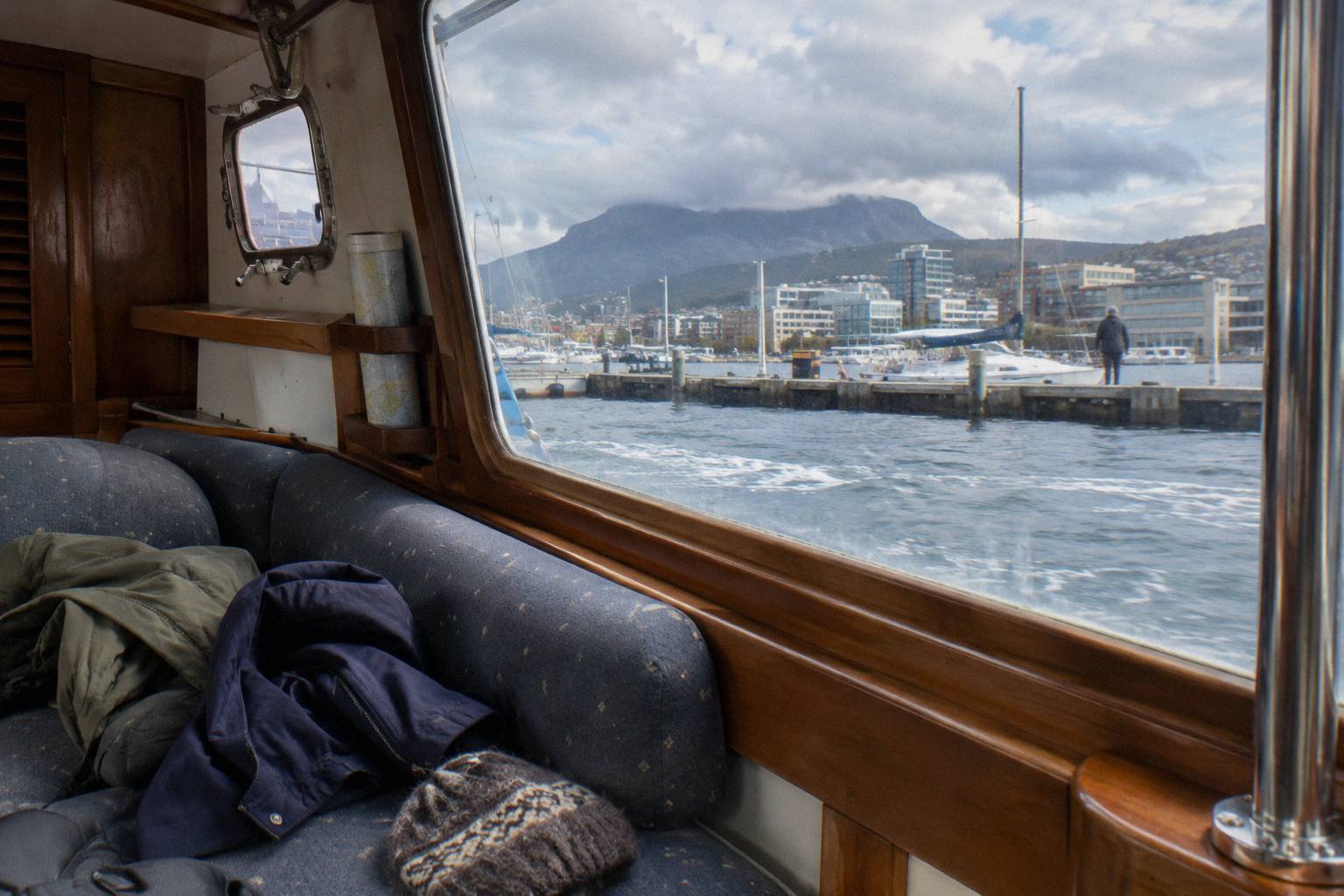
Start with the operator's own rules, which are unusually specific. The operator's FAQ states flat-out: wear flat-soled grippy shoes, and bare feet, high heels and thongs are not allowed. It also notes that harbour sailing is well protected, which tells you the sail is not an open-ocean battering but does not cancel the basic physics of wind on a cool day. The same FAQ says spare wet weather gear on board is limited, so the waterproof you bring is the waterproof you have.
Beyond that, dress for the number, not the season name. A 21 °C day in most of Australia feels warm; a 21 °C day with a 15 to 19 km/h afternoon breeze on the Derwent feels like something you want sleeves for. The Bureau of Meteorology table for Hobart gives long-term 9am mean winds of about 11 to 15 km/h and 3pm means of about 12 to 19 km/h, with higher figures on spring and summer afternoons. That is a gentle wind by racing standards, and still enough to carry heat away from an underdressed visitor.
One more thing worth knowing before the details: the site behind this guide, Hobart Sailing, covers exactly four on-the-water products from Hobart, one sail and three wilderness cruise days, and clothing logic differs between them. This page owns the clothing question for all of them, with the Helsal IV sail as the anchor.
How Cold Is Hobart, Month By Month?
Hobart's mean monthly maximum climbs from 11.9 °C in July to 21.8 °C in January and February, with mean minimums from 4.7 °C in July to 12.1 °C in January. Rainfall is remarkably even, between 38.6 mm and 61.8 mm per month, so there is no dry season to dress around. In practice: pack for a day about five degrees cooler than the forecast land temperature, plus wind.
The Bureau of Meteorology's long-term averages for Hobart (Ellerslie Road) are the most reliable dressing aid you have, because they smooth out the noisy daily forecast. Here they are in full, because this table is the one to check against your travel dates.
| Month | Mean max (C) | Mean min (C) | Mean rain (mm) |
|---|---|---|---|
| January | 21.8 | 12.1 | 46.3 |
| February | 21.8 | 12.1 | 38.6 |
| March | 20.3 | 11.0 | 44.1 |
| April | 17.5 | 9.0 | 49.1 |
| May | 14.6 | 7.0 | 47.6 |
| June | 12.1 | 5.2 | 53.6 |
| July | 11.9 | 4.7 | 51.9 |
| August | 13.2 | 5.3 | 53.8 |
| September | 15.2 | 6.5 | 53.8 |
| October | 17.1 | 7.9 | 52.8 |
| November | 18.8 | 9.4 | 61.8 |
| December | 20.4 | 10.9 | 54.0 |
Read the table as a range, not a promise. A February afternoon can run well above the 21.8 °C average and a November day can fall short of its 18.8 °C mean; averages describe the middle of the distribution, and you still check the forecast the day before. What the table does tell you is that even the warmest month has a mean minimum of 12.1 °C, so an evening or an early start is jacket weather in every month of the year.
The gap between maximum and minimum is the real packing instruction. Every month of the year sits several degrees colder at its minimum than at its peak, and the gap stays wide right through summer. If you sail in the morning slot, you experience a temperature closer to the minimum column than the maximum column, especially in the shoulder months. If you sail in the afternoon, you get closer to the peak. Two people on the same boat in April can legitimately be dressed for two different climates, and both be right.
Rain is worth a sentence because visitors often expect a dry Australian summer. There is none here: every month averages between 38.6 and 61.8 mm, and November is actually the wettest month on the table at 61.8 mm. A packable rain layer is a year-round item in Hobart, not a winter special.
Daylight matters too, because it changes how a 3-hour sail feels. Near 22 December, Hobart gets about 15 hours 20 minutes of daylight, sunrise around 05:28 and sunset around 20:48; near 21 June, about 9 hours, sunrise around 07:41 and sunset around 16:42. A summer afternoon sail ends in long evening light; a midwinter morning starts cold and stays cool.
If a sail on Helsal IV is on your shortlist for the dates you already have, the trio below shows the sail itself and the two most bookable alternatives for the same travel window.
Morning Or Afternoon: How Does The Time Slot Change What You Wear?
The operator runs two slots, and they sit on opposite sides of the daily temperature curve. October to March, sails run 9am to 12pm and 2pm to 5pm; in September, April and May the single listed slot is 10am to 1pm. The morning slot starts near the day's minimum, the afternoon slot near its maximum, so the morning demands one more warm layer than the afternoon in almost every month.
This is not a marginal difference. The BoM wind figures tell the same story from the wind side: long-term 9am means of about 11 to 15 km/h versus 3pm means of about 12 to 19 km/h. The afternoon is typically both warmer and slightly breezier, the morning cooler and calmer. Neither is better; they are different outfits.
| Time slot | Months | Hours | Dress like |
|---|---|---|---|
| Morning | October to March | 9am to 12pm | Mean-minimum side of the table, one extra layer |
| Afternoon | October to March | 2pm to 5pm | Mean-maximum side, sun protection you normally use |
| Single slot | September, April, May | 10am to 1pm | Starts cool, warms through; layers you can shed |
| Winter | Not stated | Check the booking page | Assume July dressing: 11.9 °C mean max, 4.7 °C mean min |
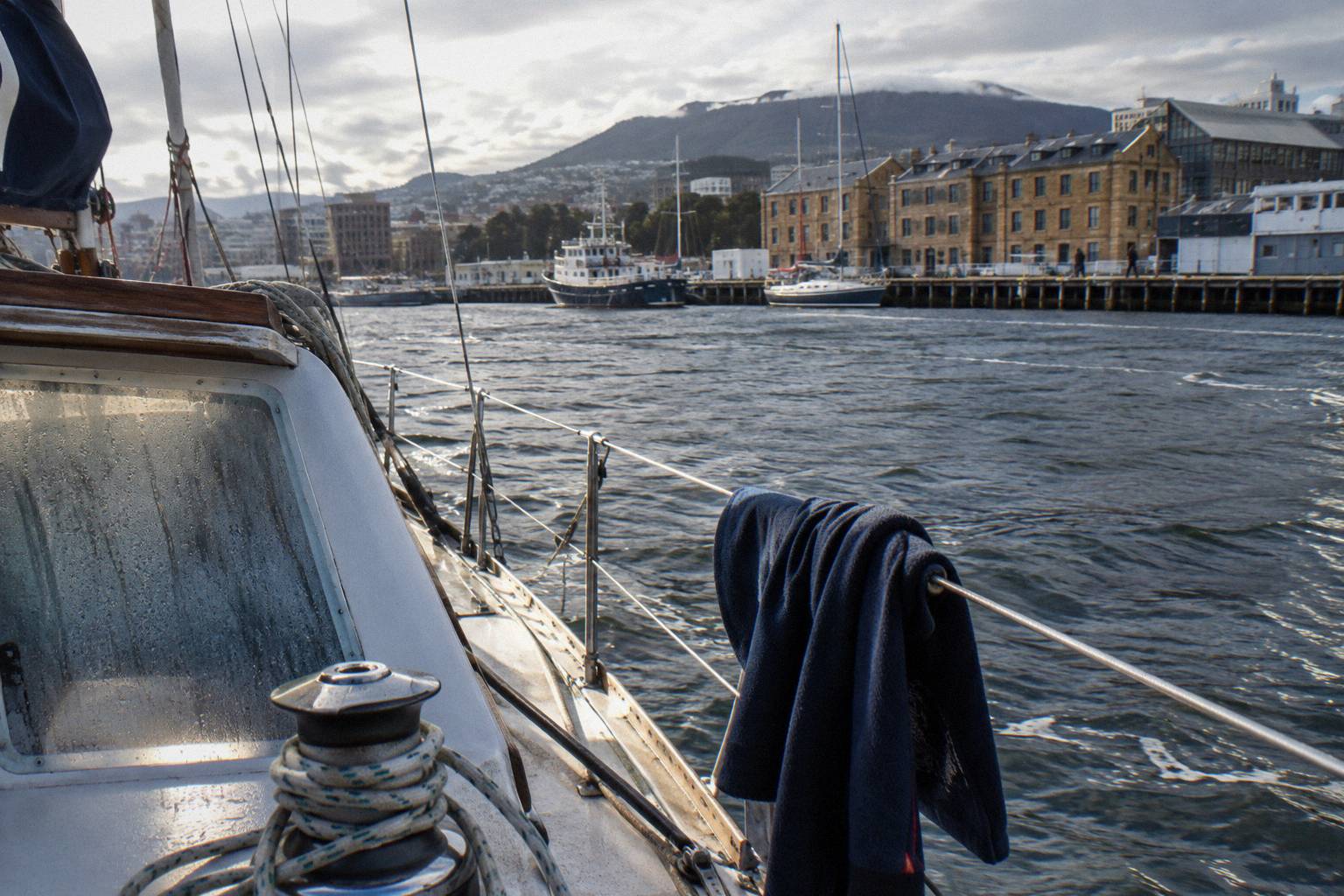
Note the season structure in the operator's own charter schedule: open sailings October to March in both slots, and September, April and May in the 10am to 1pm slot only. Winter dates are not stated, so check the booking page rather than assuming. That schedule lines up with the local sailing calendar: the Royal Yacht Club of Tasmania marks Opening Day, typically September, as the start of the Derwent season, and Tourism Tasmania highlights December to March for long days and mild conditions.
For clothing decisions, the practical read is this. Book the morning slot in summer if you want the cooler, calmer end of the day, and bring a fleece even in January, because the mean minimum is 12.1 °C and you will be on the water at 9am. Book the afternoon if warmth matters more, and bring whatever sun protection you normally use, since a southern summer afternoon on reflective water is real ultraviolet even at 21 °C. In the shoulder slot months, the 10am to 1pm sail spans the warming curve, so the shed-a-layer approach is the whole game.
A question worth settling early is which on-the-water product you are actually dressing for.
The sail from Kings Pier Marina keeps you inside the harbour where the operator says conditions are well protected, which shapes clothing toward comfort rather than exposure. The Derwent estuary's median surface temperature sits at 12.4 to 14.8 °C across recent monitoring years, warmer in summer, which is a reminder that the water below you is cold in every season, and that a waterproof outer layer is about spray and showers, not swimming weather.
What Are The Footwear Rules On Board?
Flat-soled grippy shoes, full stop. The operator's FAQ states that bare feet, high heels and thongs are not allowed, and asks for footwear with grip. This is one of the few absolute clothing rules on any Hobart on-the-water product, and it catches visitors every summer who assume a boat is a barefoot zone. Deck surfaces are hard, sometimes damp, and you will be moving around under way.
Why so strict? A yacht deck at angle, with sheets and fittings underfoot, rewards shoes that grip and punishes soles that slide or mark. High heels damage decks, thongs fall off and offer no grip, and bare feet leave you exposed to hardware that does not care that it is summer. Any clean, flat, closed sports shoe or deck-style shoe meets the rule; nothing specialised is needed.
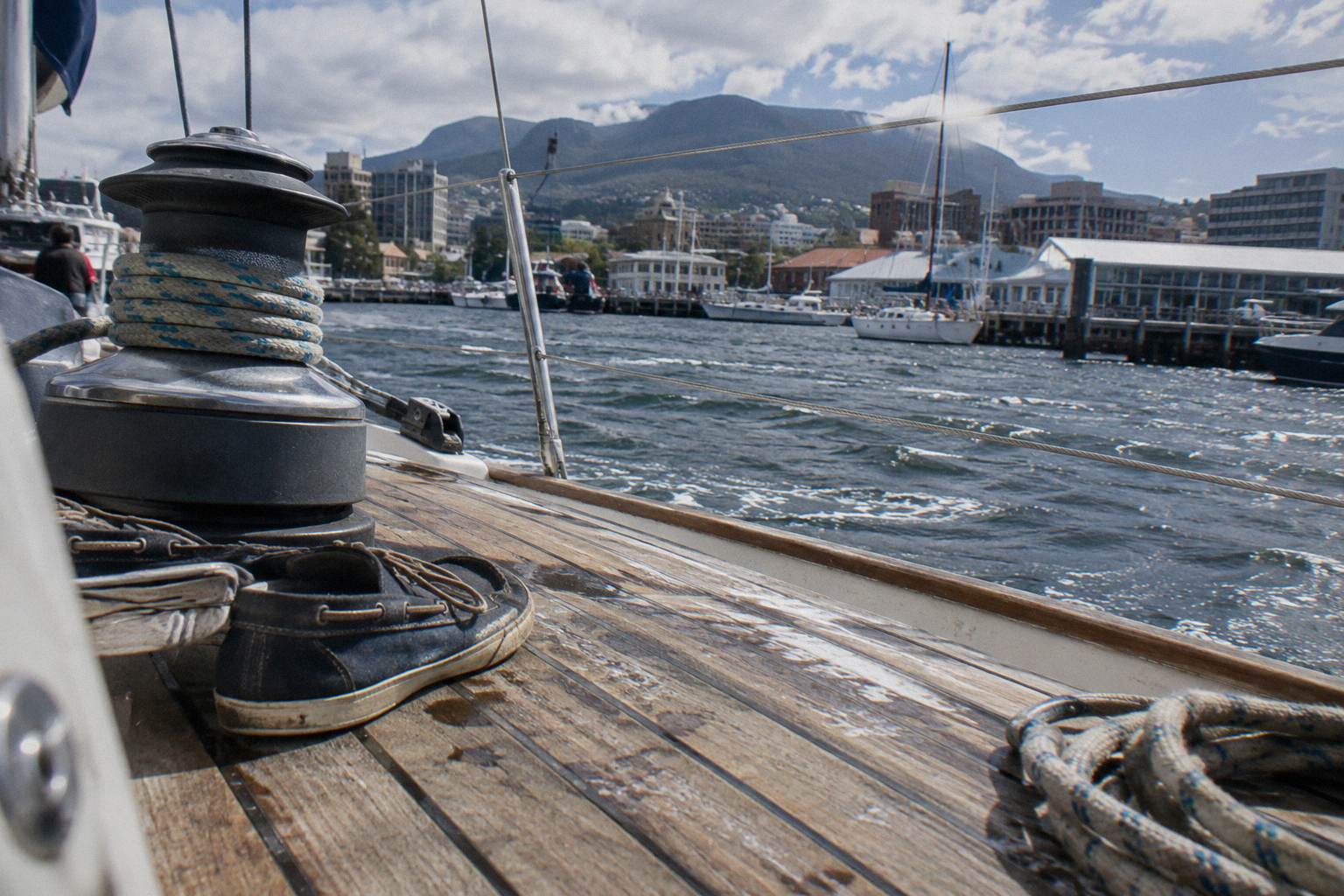
The rule applies to everyone on the Helsal IV sail, all ages, since the operator lists the experience as suitable for all ages and experience levels, with infants under 4 on laps and a child rate for 4 to 17. For a family packing list, that means grippy shoes for the children too, not just the adults, and a spare layer per child since small people get cold faster and the sail runs 3 hours.
If you are heading to the marina straight from a city day or a dinner booking, plan the shoe swap in advance. The meeting point is Kings Pier Marina, 2 Franklin Wharf, with Helsal IV the last boat on the far left of the pier, and the operator asks guests to arrive about 10 minutes early. Parking on the dock is 2 hr or permit only, with the nearest all-day parking at Dunne Place, Evans Street at Macquarie Point, Market Place and Argyle Street car parks, so a short walk in your sailing shoes is often part of the trip.
What Should You Pack Beyond Clothes?
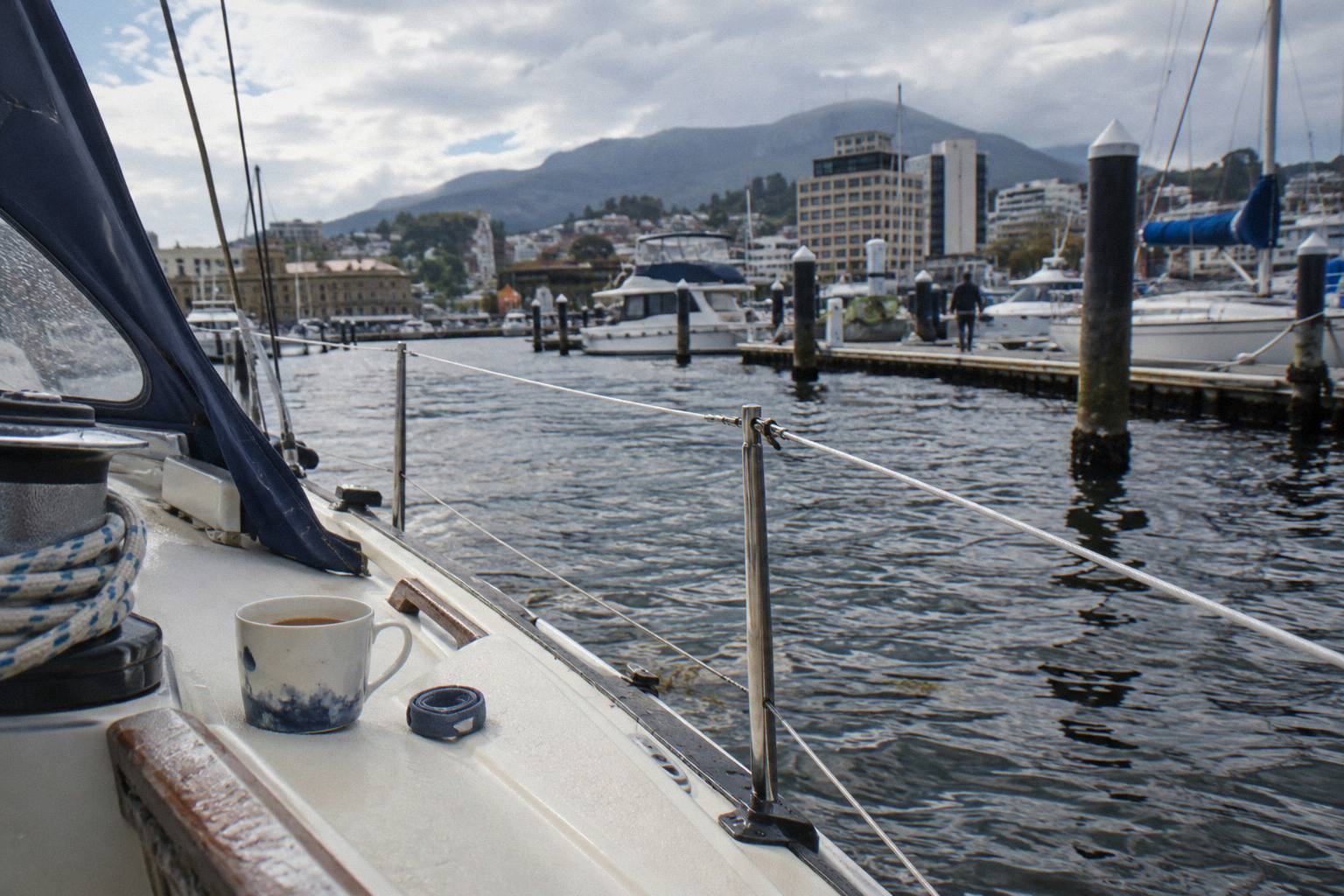
Three things the operator does not supply in quantity: wet weather gear, with only a few spares on board; alcohol, with Tasmanian wine and beer instead sold at regular bar prices; and hotel pickup, since the meeting point is the marina. Included on board are snacks, tea, coffee and water, plus sailing instruction and commentary if you want them. Sun protection is your own usual routine, one line, no more.
The wet weather point deserves emphasis because it is the gap most likely to matter. The FAQ's wording is that spare gear on board is limited, which means bring your own waterproof and treat anything on the boat as backup. Hobart's even rainfall pattern, 38.6 to 61.8 mm per month all year, makes a packable rain shell a reasonable item even on a forecast that looks fine.
| Item | On board | Bring your own |
|---|---|---|
| Flat-soled grippy shoes | Not supplied | Yes, required |
| Wet weather jacket | A few spares only | Yes, recommended |
| Snacks | Included | No |
| Tea, coffee, water | Included | No |
| Wine and beer | At regular bar prices | Optional |
| Sun protection | Not stated | Whatever you normally use |
| Hotel pickup | Not included | Plan your own travel |
For hands and head, the temperature table does the arguing: mean minimums are single digits from May through September, and on-the-water wind chill pulls every month's felt temperature down. A warm hat and gloves are obvious from June to August, and defensible in the shoulder months for a morning slot. In summer, a sun hat you can keep hold of beats one that gusts away.
What about the effects of the day itself? If you are worried about how your stomach will handle the Derwent rather than how your feet will handle the deck, the site's piece on whether seasickness hits on a Hobart sailing trip covers that question in full, including what the operator says about weather cancellations and rescheduling.
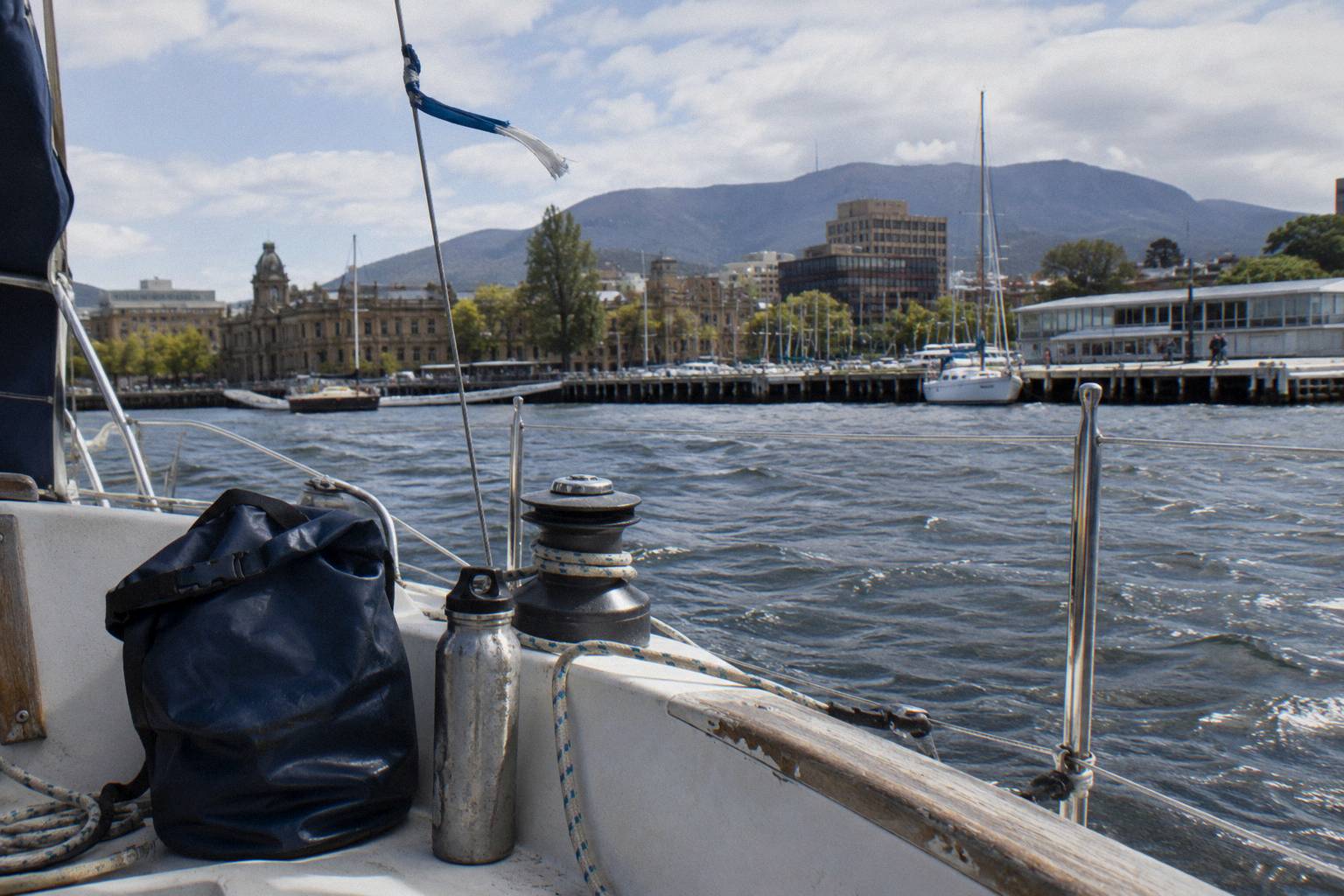
One practical habit: bring a small soft bag rather than a hard suitcase. Space on any yacht is finite, and anything you bring lives somewhere on board for 3 hours. Phone, camera, sunglasses and a spare layer in a small bag cover almost everyone's needs; anything bulkier belongs in the car or the hotel.
The cancellation policy is the last part of the packing picture, because it decides what happens to your outfit plans when the weather turns. Booking-page terms allow free cancellation up to 24 hours before, and if the skipper cancels for bad weather, the operator offers a reschedule or a full refund. If you want to read the wider price picture before committing, the site's guide to Hobart sailing prices lays out the from-prices and what is included.
What Should You Wear On The Wilderness Cruises From Hobart?
The three cruise days run by Pennicott Wilderness Journeys, the Bruny Island full day and the two Tasman Island day tours, are motor cruises on custom-built boats, not sails, and they demand serious warm and waterproof layers. The Bruny Island Wilderness Coast full day runs about 9.5 to 10 hours from US$195 per person, and the Tasman Island days about 10.5 hours, in open coastal water, with check-in at 7:15am.
That duration difference is the whole clothing story. A 3-hour harbour sail lets you get away with a marginal layer choice; a 10-hour day on the Tasman coast does not. The operator's own FAQ for the cruises is the source for conditions and clothing guidance on these days, and it also notes children of all ages are welcome on cruises while some land-based tour types are not recommended for young children.
| Trip | Length | From price | Dress logic |
|---|---|---|---|
| Helsal IV sail | 3 hours | US$115 per person | Layers, one waterproof, grippy shoes |
| Bruny Island Wilderness Coast full day | About 9.5 to 10 hours | US$195 per person | Full warm kit for a full day, own waterproofs |
| Tasman Island day tour | About 10.5 hours | Not stated; ask the operator | Full warm kit, 7:15am check-in start |
| Tasman Island and Port Arthur day | About 10.5 hours | Not stated; ask the operator | Cruise layers plus walking shoes for the site |
For the Bruny day, the shape of the trip matters: a 3-hour cruise inside a roughly 9.5 to 10 hour day that departs from the Dock Head Building on Franklin Wharf at 07:45, with hotel drop-off at the end. You are out from early morning into the afternoon across the temperature curve, so the same layer-shedding logic as the shoulder-season sail applies, only more so.
The Tasman Island day tours share the early start, with 7:15am check-in at Franklin Wharf and no hotel pickup, everyone making their own way, and run about 10.5 hours. One version adds Port Arthur Historic Site admission, which introduces a walking component: cruise layers you can open up on land, plus the same flat grippy footwear logic that governs the sail. Neither Tasman day prints a price; ask the operator when you enquire.
Cancellation on the cruise side follows the operator's standard policy, free cancellation up to 24 hours before, matching the sail's booking-page terms. The wind question on any of these days is the same one the site answers elsewhere: the skipper or operator calls off bad weather, and a full refund or reschedule follows. If you are weighing the two styles of day against each other, the site's comparison of sailing versus a wilderness cruise from Hobart works through the whole decision.
Common Mistakes When Dressing For A Hobart Sail
The recurring mistakes are dressing for the season name rather than the number, skipping the waterproof because the forecast looks clear, wearing shoes that breach the deck rule, and forgetting that a morning slot starts near the day's minimum. Visitors also routinely pack for the land temperature and forget the wind subtraction, and show up in brand-new shoes rather than broken-in grippy ones. None of these are expensive to fix the day before.
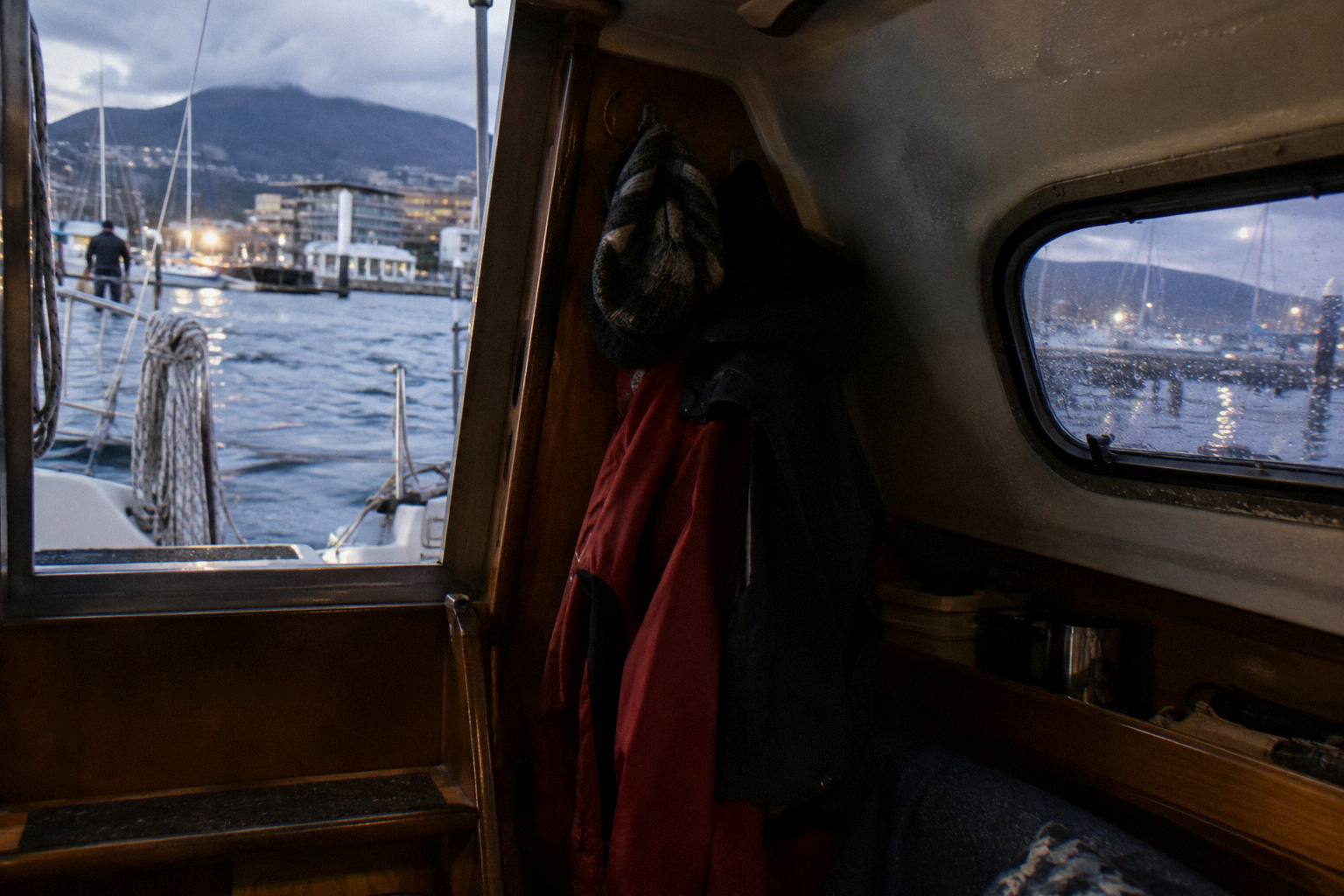
The season-name trap is the biggest. February says summer to a northern hemisphere visitor, and the mean maximum of 21.8 °C supports that, until the mean minimum of 12.1 °C and a 15 km/h breeze meet a 9am start. The fix is mechanical: look up your date in the table above, take the row's minimum for a morning slot or its maximum for an afternoon, subtract a few degrees for wind, and pack to that number.
The shoe trap has a financial edge: turn up in thongs or heels and the rule is not negotiable, it is the operator's stated condition of boarding. The waterproof trap is quieter. With only a few spares on board, the spare sizes and quantity are not guaranteed to fit you, and Hobart's year-round rainfall pattern means a shower is never off the table. A packable shell weighs almost nothing.
The last mistake is itinerary-level: booking a single outfit for a day that contains both a sail and a cruise. If your Hobart week includes the sail and one of the full-day Tasman cruises, they need different bags, and the Tasman and Port Arthur combination day adds walking footwear into the mix.
Every one of these days shares the same 24-hour free cancellation window, so a bad forecast does not lock you into a cold, wet booking. Check the Bureau of Meteorology forecast the evening before, adjust layers, and go.
Common Questions About What To Wear Sailing In Hobart
Can I Sail In Bare Feet On Helsal IV?
No. The operator's FAQ states bare feet, high heels and thongs are not allowed, and asks for flat-soled grippy shoes. Any clean, flat, closed sports shoe meets the rule.
How Much Colder Is It On The Water Than On Land In Hobart?
There is no stated figure for the difference, but the reliable rule is to dress about five degrees cooler than the land forecast. Wind on the Derwent pulls heat away, with long-term afternoon means of about 12 to 19 km/h.
Is Wet Weather Gear Provided On The Sail?
Only a few spares are on board, so the operator's guidance is to bring your own. A packable waterproof jacket is a year-round item given Hobart's even rainfall of 38.6 to 61.8 mm per month.
What Should I Wear On A Morning Sail Versus An Afternoon Sail?
The morning slot, 9am to 12pm from October to March, starts near the day's mean minimum, so add a warm layer. The afternoon slot, 2pm to 5pm, sits near the maximum, so lighter layers plus your usual sun protection.
Do Children Need Different Clothing For The Sail?
The clothing rules are the same: grippy flat-soled shoes and layers. The sail welcomes all ages, with a child rate for 4 to 17 and infants under 4 on laps, and an extra spare layer for small children is sensible on a 3-hour trip.
Is The Clothing Different For A Bruny Or Tasman Island Cruise?
Yes, mainly because of duration. Those days run about 9.5 to 10.5 hours in open coastal water with early check-ins, so full warm and waterproof layers matter far more than on a 3-hour harbour sail.